The Alphabet Soup Series

131221Some time last year, I started uploading cheap GM Advice PDFs for the Alphabet Soup series. The first one, the letter A, was free. Following that, the pdfs included topics as well as lexicon jargon advice for gamemasters, though mostly focused on fantasy gaming. The Letter Series is only up to letter C (though letter D is coming soon). These actually take a long time to write and research, so I can’t upload them as fast as I would like.

Sample entries include:

Aillen Trechenn
(also Trechend) A three-headed monster. It comes from Irish myth and emerges on Samhain from its cave at Cruachan bringing destruction. Interpretations differ. Some believe the monster breathed fire. Others say is was a bird with three heads. It might also be a three-headed vulture that leads and army of goblins. All great gaming fare, nonetheless.

Armiger
Any person entitled to bear heraldic arms, such as a knight’s squire.

Blemmyes
Headless men with their eyes and mouth in their chests.

Bribery
Bribery is a complicated system of paying above and beyond for a service one expects for free. In fantasy roleplaying games it is often a die roll or some extrapolated concept that removes that occupants from the activity. As you can imagine, the author thinks bribes should be more complicated than that.

Bribes are not only expected by members of feudal society, not paying them could have deleterious results. Someone waiting for his mail is expected to bribe the courier for his package. Without a bribe, the package may get lost, or even stolen. Anyone wanting entry to the city must bribe the guard or be marked. The list goes on.

In some cultures, the person receiving a bribe is punished more than the person giving the bribe. Tipping the writer of this pdf will not result in punishment.

Cavell
A parcel of land measured by a cord.

Curtal Friar
A friar serving (as an attendant) at a monastery court gate.

Each PDF comes with pages of these entries, expanding your vocabulary of history and myth.

134369The complimentary series is a series of clean, easy-to-read, 1d100 charts for a variety of topics that rest outside the standard 1d100 charts. There’s orc habits, guilds, pickpocketings, warning sings, and magic rings. And I know what you’re thinking. How can magic rings be ‘outside the standard 1d100 charts?’ Well. Here’s a short sample of rings from the chart:

  • Knotted, iron Viking band increases confidence, for better or worse
  • Pair of lion-headed signet rings that grant telepathic communication to the wearers, but can never be turned off
  • Dragonfly ring grants power to speak with one type of animal, while making another hate the wearer

You can read up on all eight PDFs on drive thru RPG.

http://rpg.drivethrustuff.com/browse.php?keywords=alphabet+soup&x=0&y=0&author=&artist=&pfrom=&pto=

Post World Games 2014 Year End Report

11518597-funny-goat-sketch-symbol-of-2015-new-yearNothing like waiting until the last minute. Right?

Okay. Let’s get this started.

First off, I’d like to start with all the thank yous. Thank you to everyone big and small who helped this year. Even if you only bought one pdf, hearing the stories of what people are doing with my games is so much fun. Regardless of the sales/profit/business jargon side of things, the reason I do this is that I get to create games.

And I never get tired of creating games.

The Protocol game series is proof of these. There are now 40 games in the series. 40. That’s a lot of choices.

Before it’s over there will be 60 of these things. I have no idea if I have anymore in me after that, but I’d love to cap it at 100 Protocol games. How cool would that be?

But, I digress.

Those of you who were around for the 2013 year end report may have noticed that only about half of my plans came true. That said, I released 75 products in 2014 vs. 40 in 2013. So. I’m not exactly sad about what I was able to do.

However, it is true that I’m a little behind on work for those of you still waiting for GMZero and Toolcards 2.

There is a schedule/plan to get these games done. No fear. I might be late, but I will never cheat anyone.

2014 also saw the development of projects with Souljar Games, my other game company with Alyssa, Jack, and Ross. We are already started development on our next two board games, as well as two expansions for Cairn. For those of you not involved with what we’ve done so far, you can check out souljargames.com

So? What’s next?

The big plan for 2015 is the Dramatic Game Engine, a new roleplaying game system that I intend to release at least five games with, though not all this year. The first has already been announced — Bastille Day. You can read more about that elsewhere on this page or the internets.

bdlAdditional games using this system involve a scifi game, a game set in the an alternative 1960s America, and a dark fantasy game. I’m keeping the last one under wraps for now.

Mum.

I also have a three game series of ‘society builder’ rpgs coming. They’ve been ready for development for sometime now, it’s just a matter of inventing more hours in the day. The first of the three is called Fairview and it’s set in a post-apocalyptic 1950s America. All three games play the same, but the styles are very different.

But that’s not all.

I still have three more games ready to go: NM156, 151 Minutes, and The Last 12 Hours. I think they need new names, though.

NM156 should be ready in the first quarter, while the other two need more writing. NM156 is an homage to Logan’s Run. 151 Minutes is a hostage stand off game with a gamemaster pitted against the players and the Last 12 Hours is a GMZero game in the style of Pulp Fiction or the Last Seduction.

Damn. I feel like I’m just spitting out information.

I’ve been awake for 22 Hours. So. Forgive me.

Finally, I’d like to announce the first Double Door Prize of 2015. I’d like to honor the amazing two-player game, Longhorn by Blue Orange. This game is everything I like about two-player games. Innovative, fast, tons of replay value, and a thorough understanding of its own design engine. Let’s not forget the gorgeous art as well. And for $20, you’d be hard-pressed to find anything better. It even comes with 45 wooden cows.

Now. I just need to decide which prize icon to send them.

10626324_732841553478879_4860624810857695372_o 10860851_732841586812209_713463098204610858_oWell. I think that’s about it for the 2014 year end report. I’d like to give a final shout out to a few key people who made the year easier. Ruth Phillips, Karen Rucker, Tobie Abad, Timothy Hidalgo, Anthony Moro, Leslie Gilbert, Mike Leader, Rob Adams, and of course Diana Stoll, my rock star.

Have a great new year. I’m taking the first week of 2015 off, so I’ll be gone until the 8th.

Double Door Prize

PrintThis is going to sound strange, because game companies don’t do what I’m about to do. But I don’t usually do what is ‘normal.’

And I certainly don’t care what other game companies do.

Starting in 2015, I will begin offering an award to games that ‘rock my world.’ But I won’t be giving them out in specific categories and I won’t be awarding the prize out at regular intervals. In fact, the Double Door Prize will go to a game that particularly grabs my attention at the moment it does so.

Of course. There will be honorable mentions from the past, such as History of the World and Montsegur: 1244. But I could list games like that all day long.

The fact is, I want to honor games ‘moving forward.’ And since I have no qualms pointing people to games that are good, even if I didn’t make them, I think the Double Door Prize is an interesting step in more hobby ‘synergy.’

Gah. Did I just type the word ‘synergy?’

The Official Statement

The Double Door Prize is awarded to any product in the tabletop gaming milieu that evokes exceptional ideas, execution, and design. Products that inspire and advance the hobby in interesting directions — as judged by jim pinto — are awarded the Double Door Prize.

Why the Name?

Tobie Abad brought it to my attention that ‘pinto’ means ‘door’ in Filipino. Instantly, my mind thought Door Prize and the convergence of ideas happened. Of course, calling it Door Prize isn’t thematic to the adventure hobby, but a DOUBLE DOOR sure is. The logo just sort of happened.

Cards Against Your Face

Just in time for the holidays, I’ve created and released three unofficial expansions to a famous, horrible, offensive, ‘you know what it is’ card game. The cards are print versions, not those ridiculous paper PDF things. Gross.

Each deck has a theme and includes 75 cards (55 white and 20 non-white cards) on premium paper.

cardsagainstcivilityCards Against Civility is themed around ‘those people’ who don’t seem to have manners and fit in with the rest of us. You know who you are. Audi Drivers top the list.

http://rpg.drivethrustuff.com/product/141101/Cards-Against-Civility

cardsagainstcivility94

cardsagainsthumilityCards Against Humility is themed around events and people that/who embarrass us. Grandma kissing you in front of your friends would be an example, though it didn’t make the final cut, though watching porn with grandma in the room did.

Awkward.

http://rpg.drivethrustuff.com/product/140867/Cards-Against-Humility

cardsagainsthumility126

cardsagainststupidityFinally, my favorite of the series is Cards Against Stupidity. This is just the kind of stuff that drives me nuts (and probably you, too). Seriously annoying and stupid things and people. My favorite from the deck is probably people who shave off their eyebrows and draw them back in with a sharpie pen. If you’re going to get one, get this one.

http://rpg.drivethrustuff.com/product/140723/Cards-Against-Stupidity

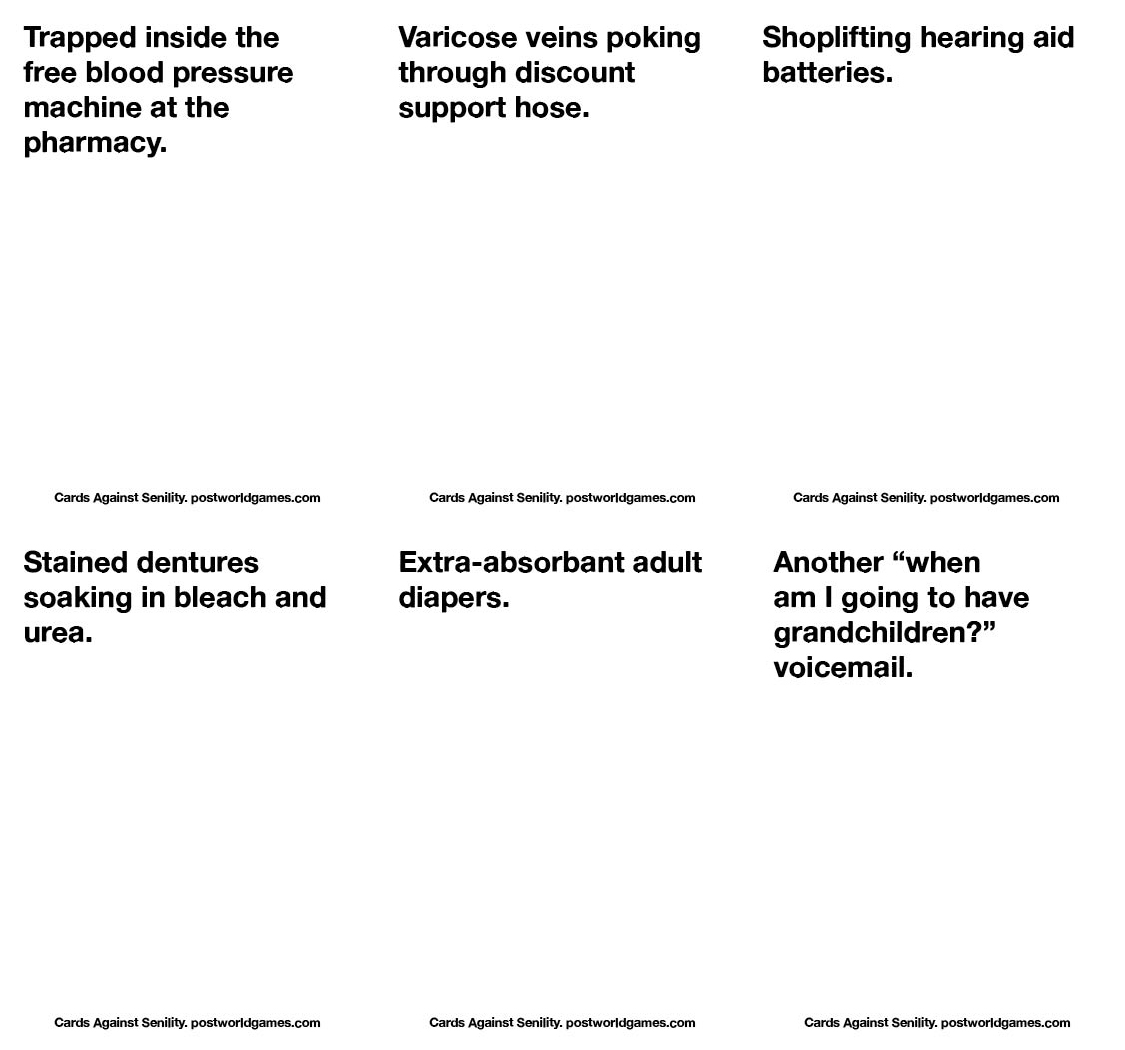
cardsagainststupidity136Update: Two new decks.

Cards Against Pervertity and Cards Against Senility.

For obvious reasons, I can’t post the Pervert ones, but here’s some Senility for you.

cardsagainstsenility6

More Design Advice: Graphicality

I’m sure there times I’ve reviewed a game, or posted a screed and you wondered, “what is he doing?”

Well. Sometimes I give general game design advice. Or writing advice. Or graphic design advice. And no matter what you are doing, there are specific rules to HOW and WHY you do things. All forms of design adhere to the same rules. There are hierarchies of how information is presented, form and function marrying well, and legibility, among others. Within these rules are various techniques for achieving your ends. Two typefaces might contrast one another, in order to make the information appear different or stand out from one another, for instance.

This isn’t a workshop, so I’m not going to list everything. Just know, that anyone working in design, knows there are rules, even if they don’t know everything there is to know.

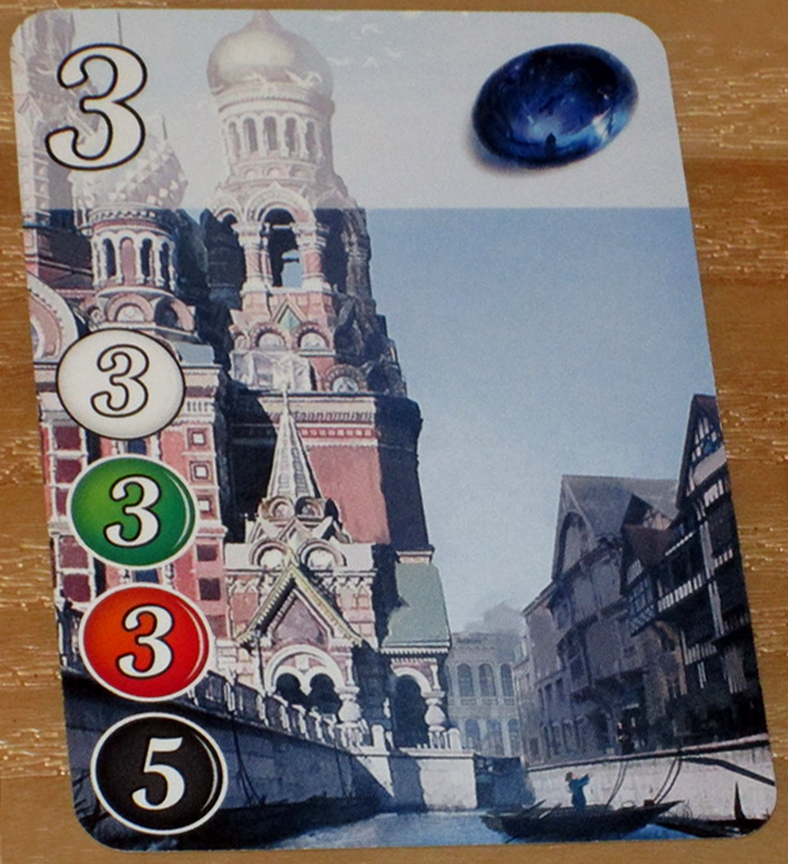
(I’m still learning)Previously, I talked about this in how to make character sheets for a roleplaying game. Design is a crucial element, but often character sheets are an after thought. Today, I’m going to use one of my favorite board games as an example of how NOT to design card frames for your games.Ready?Disclaimer: Splendor is a brilliant card/board game. Genius. It did not need a veneer. It is so obviously themeless, that it could have just been numbers on a card. But I think modern eruo-gamers wouldn’t have liked it and wouldn’t have played it if it didn’t have the jewelry leitmotif slapped on it. And it is just slapped on. Again. The game is genius. Go play it.This is what a typical card looks like in Splendor.

splendor1If you’ve read this blog before, you probably know where this is going already.

And here is what this game information means.

splendor2Without explaining the rules, the card cost is the single most important piece of information on a card. It is what you look at for over 50% of the game. Once purchased, the ‘in game bonus’ becomes the most important piece of information on THAT card, but not on ALL cards. Finally, the VP is only important at the toward the end of the game as you need 15 points to win.

The art is never important. It is merely a game affectation.

Now. The first thing I would have done with these cards is removed the art. There’s a small amount of thematic cues to the card based on the card back (level 1 is mines, level 2 is jewelers, and level 3 is cities), but this is mostly superfluous information. But, presuming we keep the art in, the design here is just messy and incoherent.

First off, the art is the largest piece of information and it’s useless.

Second, the other three elements are relatively the same size, positioned in each of the corners, and not all that amazing. Seriously. The typeface for the numbers looks like the first free one out of the box. The in game bonus in the top right is one of five different colored gems. It’s fine for what it does, no complaint, but it doesn’t need to be as big as the card cost icons.When I’m playing the game, I’m looking at three things. How many gems I have (tell me what I can buy), how many gems my opponents have (i.e. what they can buy), and the card cost of each card. And while the information is easily legible, it’s the same size on the card as the other two pieces of information (in order to give room for the superfluous art).

Now. I’ve worked at enough game companies to know that sometimes the art directors aren’t gamers. Or at least, they don’t always play the games. Hell. I’ve been hired by people to make cards without know HOW to play the games. So, I always ask them to provide a hierarchy of information so I know what’s important and what’s not. And I’ve actually dropped out of projects while fighting production managers who didn’t even understand their own product.

(“You’re not selling the art. You’re selling a game.” I would say.)

Now. Had I been hired to make these card frames (and the art had already been ordered, as I presume was the case here), this is how I would have handled the card frame sketch (before doing any real work).

splendor3Notice how the card art is screened behind the information and the card costs are FRONT AND CENTER. This is purposeful. I’ve played the game now, I know what I need to know while playing it. The in game bonus is still at the top right, because that gives me a discount on all future purchases. I definitely want that information handy. And the VP is tucked at the bottom right, because I don’t need that shouting at me.Now. You’re thinking, but if I fan my cards on top of one another, the VP is hidden under the other cards. And you’re right. This would be hurt my ability to play the game. So. I’d make this change.

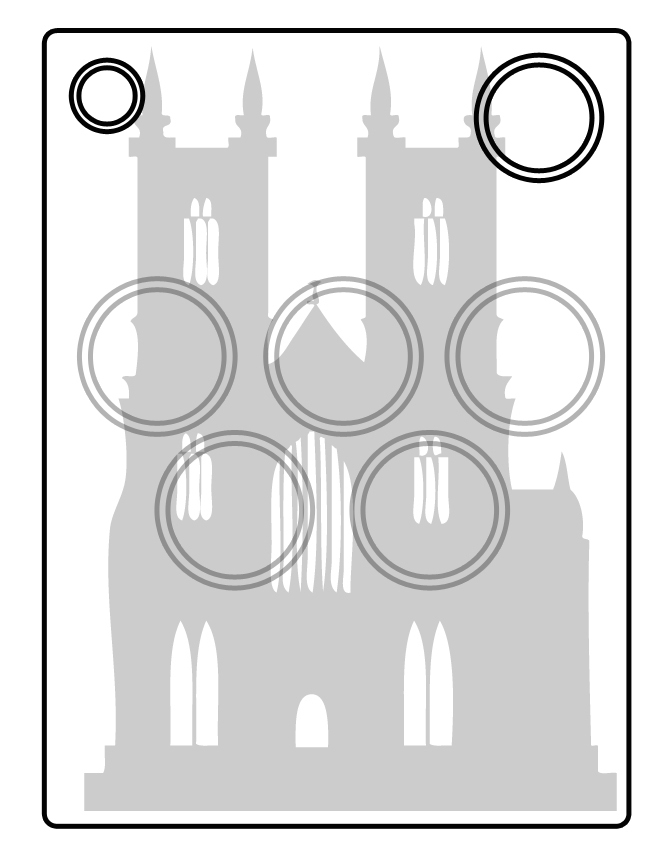
splendor4Now the VP is at the top left, but at half the size of the gem at the top right. Removing all of my explanatory text, a card frame would look like this.

splendor5Everything in it’s place, everything easy to read, and the art still adding ‘visual texture’ to these abstract game, while not interfering with the gameplay. This is so brain-dead simple, I don’t know why people continue to make games that mess this up.

[Aside: All this card art, and they still ordered a separate piece of art for the cover that doesn’t appear on any of the cards and has zero thematic value. What a waste of money. All that said, it’s selling really well for them. So good on them.]

Okay. So Splendor isn’t the only game that has these kind of headaches.

In fact, I deal with companies all the time who don’t want to spend money on art or icons or anything, but still want to look like Ticket to Ride. And there’s no way to do it with the cavalcade of data that’s sprawled across the game.

Here’s a card frame I made for a game that had almost zero art budget. No lie, I had to order b/w art and make it look like it was colored. I had to use an inordinate about of textures and I had to to present the information in such a way that the card text and icons wasn’t fighting the rest of the game.

fatecards_all-1I won’t defend how the style of this game harkens back to how games were made in the 1970s, but this publisher’s material plays like old school products, so I think it’s a match in that regard. But. Most importantly, it’s clean. Title and art are not important during play. In fact, if I had my way, that information would be on the bottom of the card. But that’s too revolutionary for words. Once the card is on the table, people only have to read one of those columns as the game text in front of them. Everything is explained immediately.

I’m working on a board game here soon called 100 A.D. We’ll be kickstarting it early next year. The game design is mine and the card frame design will be mine as well. The art will be kept to a minimum because the information on the cards is so important to play.

(You’ll see what I mean in a few months.)

But when I do it, I’ll link back to this art and show you an example of me putting my money where my mouth is. In the mean time, stop putting information on card frames in the wrong order.

Thank you.

This PSA brought to you by the Kellogg Foundation, Price-Waterhouse Cooper, and 1d6. Never underestimate the value of designing a game around a dice type that everyone already has.

Two New PDFs

The last couple of nights I’ve been busy with non-essential writing. [Sorry. I happens sometimes.] Inspiration hits and I don’t have a lot of willpower. I’ve made two new PDFs that are system neutral.

One is another addition to the Alphabet Soup line of pdfs that includes Lexicons and 1d100 charts. This one is about guilds, providing political fodder for fantasy campaigns. Heck. A little work and these could be corporations in a cyberpunk game.

140515http://rpg.drivethrustuff.com/product/140515/Alphabet-Soup-GM-Advice-Document-100-Guilds

The other one is a new line of PDFs that I’m developing — essentially fantasy worlds on one page. The first was written by Chrystal Andros about a world of decadent monarch who plunder their own family’s wealth. There will definitely be more of these in the series.

140448

http://rpg.drivethrustuff.com/product/140448/Monarch-Tombs-OnePage-Worlds-Vol-1

Love and Sex and All That Gooey Crap in Games

Traditional roleplaying games are about adventure. And adventure is a key ingredient for understanding why so many gamers balk at the idea of playing something ‘different.’ I could talk/write for hours about gamers who say, “that game is weird” when they mean, “That game is not about an adventure. What do I do in it?” In fact, many people keep calling their products roleplaying games, even when they aren’t because the phrase roleplaying game is so indelibly linked to adventure gaming.

What do you do in D&D? Go on quests to find treasure.

What do you do in Traveler? Go to outer space and hunt down bad guys and treasure.

What do you do in Deadlands? KIll outlaws and zombies and zombie outlaws and take their ghost rock (treasure).

What do you do in Shadowrun? I have no idea. Pretend it’s not D&D with guns?

All snark aside, our expectations of what we’re going to do in a game suggests that if a game is outside the comfort zone of adventure, killing werewolves with AKs, or exploring unknown worlds, it becomes hard to understand “what will I be doing in this game?”

• • •

For whatever reason — and I don’t have a good answer here, perhaps maladroit teens with social anxiety — adventure games are about people with no past, no human relationships, and no connection to anything other than the present. Save the prince? We better do it now. Sneak passed the guards? We don’t have time to do anything but kill him and get inside.

Just once I’d like to see the PCs investigate who the guard is, follow him home, and then have a private conversation with him there about how much it’ll cost to sneak into the tower at night. Or even better, dig up some dirt on him or leverage a favor.

• • •

If I wrote the back text of a game book that reads:

“Welcome to the Lands of Arnas. The World has been broken. A cataclysm has befallen the land and the people suffer. Wild beasts roam the earth. The sun has turned black. An ancient evil has awoken. The end times are now.”

There would be no question in your mind what you’d be doing in the game, despite the fact that the game doesn’t say, you’re adventurers trying to heal the land. But what if you bought it, got it home, and realized it was the setting for a love story? Or a human drama piece about barons and warlords vying for power? What if I told you the game was about five children with the power to unmake creation, who haven’t been born yet? Or the gods would grant the world a reprieve if the PCs could only decide which of them should die?

All of a sudden, you’re confused about what you’ve just bought into. It’s not about overland travel, riddles, treasure, and goblin tactics? What is this game?

None of these questions are wrong, by the way. But there’s a convenient perspective that roleplaying games are adventure games, because a 40-year pedigree of game design has found one element of dungeons and dragons to riff on… killing people and taking their stuff — you know this meme as murder hobos.
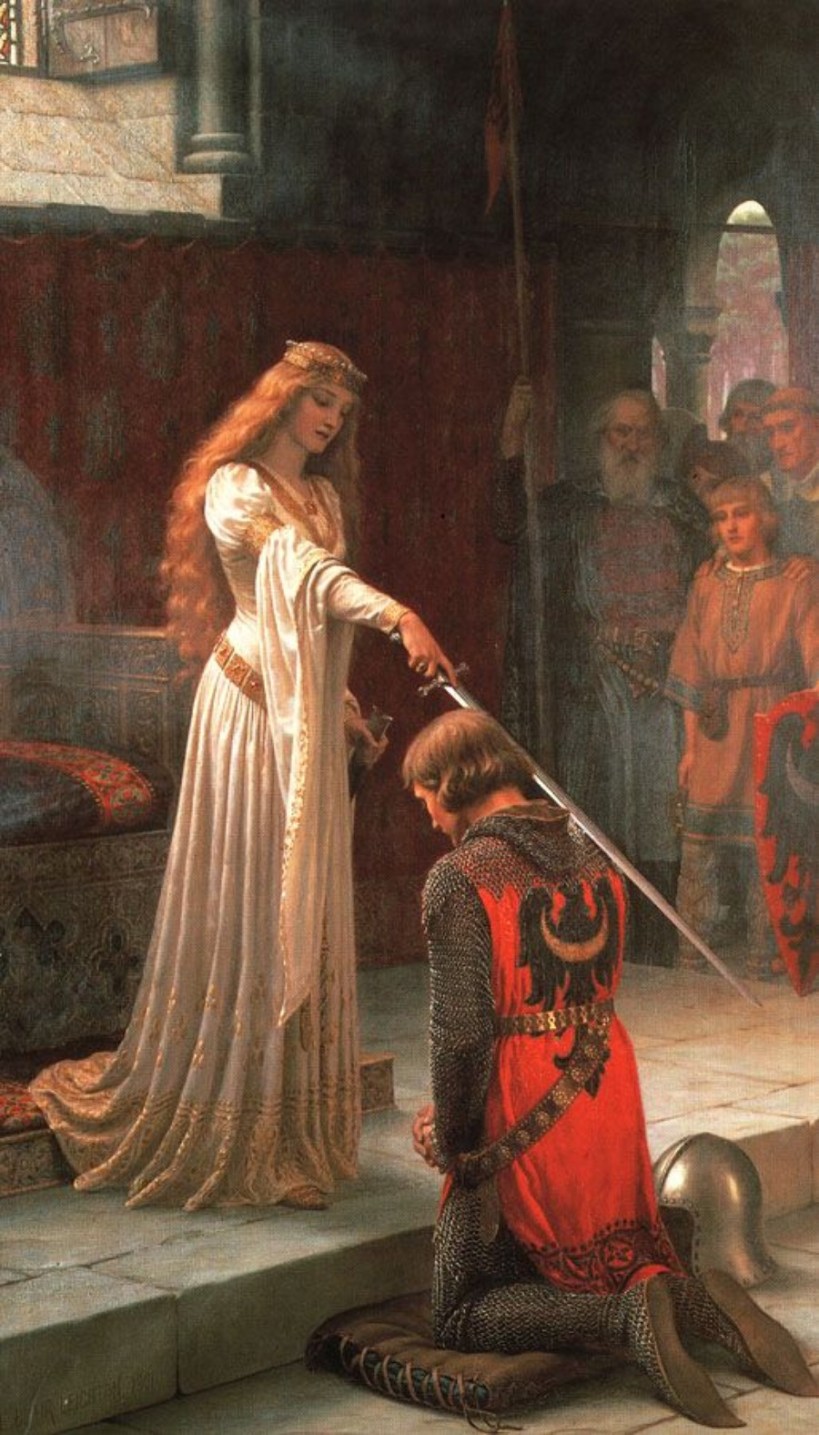
knight

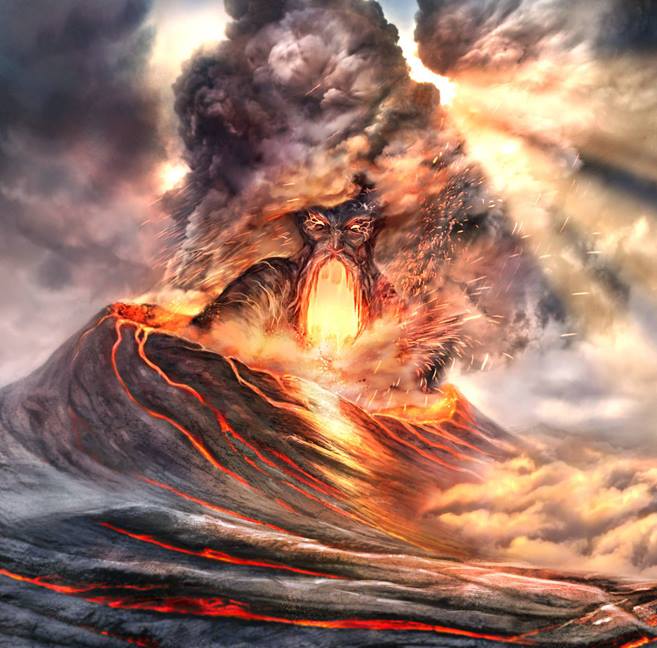
There are a dozen ways to interprets what is going on in this picture (as it relates to games).

Now. There’s nothing wrong with playing games about killing stuff. In fact, I like those kinds of games, too. But I like lots of games. And I want the things I do to matter. Why can’t I save the village and then fall for someone in the village I just saved? Or maybe fall for someone in the village, which is my impetus for saving the village in the first place. What if I’m from that village and I know everyone there. Of course I’m vested in saving it now.

Which brings us to games about human relationships. Adventure games rarely get passed the “how do you know each other?” question to express ideas beyond, “we all like gold.” But modern games are growing more complex than that. How people are related to one another is a fundamental question to nearly every non-traditional game. Fiasco spends 90 minutes before the game starts answering this question.

[Protocol does it in 10 minutes. Plug.]

Characters can love one another in games. We can develop stronger bonds and assume a past between characters with a simple 5-10 minute chat before the game starts, as we build the foundation of the story. I’ve run entire sessions of Vampire and Blue Planet that were just about the back story. I once ran a Vampire campaign and the first six sessions, the characters were still human and hadn’t turned yet.

And unlike traditional games where we worry about “Where are we camping tonight?” and a 1000 other moments of minutia, characters can have romantic relationships without ever exploring the awkwardness of describing their sexual congress. We just assume it’s something that happens.

Which bring us to another strange part of gaming: Love. Now. I won’t get into a debate about love just being chemicals in the brain trying to tie us into secure relationships that are beneficial biologically and that romantic love is just a made up thing. The fact is, 99% of humans understand that love is something they can’t control and it’s a vital part of the human condition.

Vital.

We dedicate almost all of our energy to attracting people to us. We want them to smell our hair, or notice our bodies, or our eyes, or our talents. Or whatever. Even when love isn’t sexual, it’s still a base human desire to be wanted and needed. And yet, we never explore it in games. We build this realistic worlds, argue about halfling movement rates, debate whether or not dwarven women have beards, list every f**king item in our backpacks, and build feat trees for our characters so we’ll know what we can do at level 9.

But talk about love during the game?

Impossible.

And it makes no sense. Now. I know most of my gamer friends are hairy men with bad breath and the last thing I want to do is roleplay a scene with them about lizardfolk copulation, but it’s kind of stupid that we can’t.

Or can we?

I’ll do and say a lot of things at the game table with people I trust that I would never publish. Look over my games. They are all about human drama, but not a single one is about sex. Unless you make it about that. For all my posturing in this post, I don’t think roleplaying games should be about sex. Call it my puritanical upbringing, but there’s a division between everything else we do in our lives… and sex.

Which is so hypocritical, I know.

We can encourage players to take on the roles of other genders (including TG characters in the latest editions of some games), and yet we can’t get to this place where gender even matters, because the games we play about everything but relationships. And I’m not saying you game like this, but find a page in any mainstream RPG that addresses human relationships on a deeper level than, “Why are you together?” and I’ll send you a free PDF about robots who hate each other.

It’s easy to say, “Well roleplaying games aren’t supposed to be that realistic.” And to you I say, “What are you doing reading a post about love and sex in roleplaying games if that’s your point of view?” Some gamers can’t play a female character because it’s “too weird,” but playing a dwarf from an alien culture and physiology is just fine?!? It’s no wonder we discount the value of human emotion and relationships in roleplaying games, we don’t know what being human is.

Check out Walking Dead Season 1 and 2 by TellTale games for more examples of real human relationships in games.

As always, my endings are awkward.

What He Posts Next Will Leave You Speechless

It’s been a strange month. But who cares about that? Let’s get into it…

I hope by now that people have a sense that I am no-nonsense and straight-forward. My writing style is concise, emulating my lack of patience for noise. People taking too long to say what they mean and obfuscating their true intentions behind pandering marketing and ‘perfect-timing’ posts is the worst. In fact, anything disingenuous irks me.

But the past two years of game designer have been an education in just how obvious the noise in marketing is more important than the product. Or at least, more important than I would like it to be.

Recently, I had a conversation of what it’s going to take for Post World Games to start being successful (that’s right kids, I really don’t make a passable living at the moment). I got a lot of amazing advice. Really. I’m not being sarcastic or anything. I listened. I fought it all. But I listened.

Over the past month, I really haven’t wanted to work. I’ve completed over 60 projects this year, so I’m due a break. But it’s more than that. The work continues and I love what I do. But I’m tired of the fight to “get more sales.” This isn’t the 1950s and I can’t just be a successful author without self-promotion.

But. I hate self-promotion. I hate it so much, I have probably mentioned it about 200 times in the last two years.

I could go on about it, but I won’t.

Asking someone to do something they don’t like or aren’t good at won’t net good results.

And generating ‘community interest’ in a disingenuous way doesn’t mean you’re going to be making good games.

I write what I want. And when I want to. It’s a horrible business model, but it’s honest. I’m not working on a zombie game because zombies are hip. I’m working on a zombie game because Anthony and I stumbled upon a genius idea that I’m sure rpg.net fans will hate. That’s an example. I’m not going to digress about zombies.

So. As the end of 2014 approaches, I continue to work on games, plan my kickstarters, and look toward a different philosophy in 2015. More posts. Less games. More community, I guess. But in a way that I am comfortable doing.

Which brings me to the present. There are about 50 to 200 people who are just amazing supporters of my work. The latest kickstarter made 2750 in its first day. Great for a company of my size. But apparently, it could have done more. Apparently, if I was on google+ and rpg.net and all these groups all over the net, community-building I would be doing better. I would have had a 10k day or something. I see other games on kickstarter generating a lot of buzz and I wonder if the quality ever matches the funding results. I don’t back them, so I don’t know.

I still believe in the artistry end of what we do. I don’t make Apocalypse World hacks because AW is popular. I make what I think is a good marriage of style and substance; function and form. So. I want to keep making good stuff. I don’t want to spend 6 hours a day talking about what I’m making.

An aside:

Yesterday was a slow day on the new Kickstater. After a 2750 dollar day, I saw $1 in backing on day 2. That’s a strange slowing down on backers. So instead of racing around making myself crazy, I used the day to finish up two of the new Protocol Games. I’m always going to focus on making better games for everyone. That’s something you can expect. If you know a better, smarter path to help me build more ‘community’ around the Protocol system — and I’m convinced it should be as popular as Fiasco — I’m all ears. I know there are dozens and dozens of designers in the same boat I am in — working hard and wondering why the results aren’t there. None of them put out 60 products this year (instead sarcastic grin), but we all share the same commonality of getting anyone to notice what we are doing.

Anyway. Before this becomes a soapbox/pity party, I should sign off. Once again, I need to thank all the people who are supporting my efforts. My inbox is always open to chatting about games. Also, there’s a comment box below. Use it.