There’s a lot of clamor about what makes a great game. Different tastes promote different kinds of gaming sites, which in turn leads to fracturing of the gaming culture into little islands of game design thought.
I can’t really comment on what other people like and desire or why they’ll play one guy while claiming to love another kind. I think if you don’t work in games all day long, you develop a different language for expressing what you like and why you like it. And frankly, the vocabulary of expressing LIKE is much smaller and harder to define than the vocabulary of DISLIKE. Critics of anything are well aware of this and it’s why it’s so much easier to review a [thing] negatively rather than positively.
For me, I’ve spent a long time being very vocal and opinionated about why I like something or don’t like it. Which is ironic, because when I was at Shadis magazine, I had a strict policy of only talking about what I liked.
And I’m not exactly sure what happened. Granted, I’ve always been very opinionated, but I think working in a creative milieu does things to you. Having a good idea isn’t enough. Especially with design by committee. You have to explain why it’s a good idea and then fight to include this great idea. Then you have to make this good idea into reality, hope it doesn’t get cut, sometimes fight to get it printed properly, and then at the end of the day marketing may not even know it’s part of the gestalt, and not using it in the marketing plan.
These facets of the industry can grind away at you. Looking back, it’s an environment I am not suited for. And it wore me out. (Having said that) This site will not be about the black eyes of the industry, but the things I love. I want to go back to loving gaming again and not just doing something because Company X needs their game-world to have zombies AND pirates because “we heard those are hot now.”
[Corner me at a convention someday about why I don’t like Kitchen Sink game worlds.]
I’d like to get the ball rolling, but writing about some games that I like. Here is a short list of my favorite games. (Look. I’m actually going to express why.)
Twilight: 2000. The original. I know it’s a dated game. I know the first and third editions are for people who like inventory lists and martial tactics, but there’s nostalgia there. Whenever I play, I can see the blasted landscape of Poland, the obvious parallels of the game-world to WWII, but now with dwindling resources. This game stirs something in me and I can’t get enough. Post-Apoc is my favorite genre, but it has to mean something. Morrow Project was a brilliant idea, with bad mechanics and even worse writing. Gamma World never did it for me. I’d love to sit down and play some of the smarter games out there in this genre. If you’ve never heard of it, check out George’s Children by myself and Jon Hodgson.
Power Grid. The designer of this product said this game was designed to be played “by the seat of your pants.” Which is an amazing design philosophy that has little to do with it’s final execution. While the game is still hugely successful, no one plays it the way Friedemann Friese suggests. The game is a hit with left-brainers who care less about theme and more about the moving parts of a game. Which is converse to my thoughts on themeless games. I usually avoid them, but this one I love. I’ve only won a couple of times, but I still enjoy the process. For me, the game has many perpetual motion features that I love to see in a game. Expect to see a free little addition to Power Grid on here eventually.
Jovian Chronicles. I’m not a sci-fi fan, which I believe is different from science fiction. Can’t watch Star Trek, or Bab 5, or Firefly, or anything on the SyFy channel. But I loved reading the Foundation and Empire saga, Joe Haldeman’s Forever War, and the Rama novels. Someone should do roleplaying games about those worlds (my apologizes if this has been done). Jovian Chronicles is one of the first ever science fiction roleplaying games, I can think of. GURPS Space might count, but it’s so generic, I don’t see how it can do emulate true science fiction without the GM doing all of the heavy lifting. Jovian Chronicles has brilliant dice mechanics. Really smart. I can’t believe they haven’t been stolen. (Maybe I should do that?) And the varied planets ensures that the GM and players tell the kind of science fiction story they want to tell. Did I mention that it’s set in the near-future in our own solar system?
Psychosis: Ship of Fools. The inspiring roleplaying game I can not describe without ruining the surprise of it all. Requires a GM and some tarot cards, but good players can game without all that. Heavily influencing my upcoming game Dying Memories.
Carcassone: Hunters and Gatherers. While the original is a juggernaut of the gaming industry, I think this pre-historic variant is the strongest in the series. It’s faster, easier to score, and the theme fits more with my style of game. Frankly, there’s not enough nomadic hunting-gathering games out there. GMT’s Dominant Species isn’t bad and there was one called Nomad there really should have been a video game. Just too many moving parts, and too many points to calculate. But it did come in the best gaming package ever… a little leather pouch, thematic to gathering cultures. Phil Eklund also did Origins, which I’ve never played. I love Phil’s work, but this one seemed far to simulationist for me and I never got around to it. If you’ve played it, drop me a note and tell me what it’s like.
Kult. Another roleplaying game on the list. I never loved Call of Cthulhu the way other people did, mostly because I never found the right groups to game with and maybe because the game never fully took itself seriously. For a horror game, I really want crawling at your skin kind of madness, not crazy scientists setting fire to libraries. Cthulhu has its place and I’ll always love it, but Kult is cut above. It’s like gaming inside the brain of Clive Barker and the PCs are the villains of a normal story, forced to kill things even more grotesque than they are. I think I was a murderous cultist in my first game of Kult, trying to stop the evil spirit that made Charles Manson so powerful from returning. Thank local GM legend Tom Cummings for that one. In this genre, I also recommend Nephilim.
Shadows over Camelot. This is perhaps the most saccharine game on this list. But I love it for reasons very different from other people. For starters. I cheer for the black deck. I really like this aspect of play. I’ve used it in design a few times and I love it when designers take this approach to conflict. I also like the tension that can exist when the players are short on actions and the clock is ticking. Because of the numerous paths to victory and/or failure, this game is just a cut above all other co-op games. And yes, I’m aware of the syndrome among co-op games, “the smartest guy should go play by himself and tell us how it turned out,” but that’s not completely appropriate in this game, especially with the potential for a traitor and the fun here being about the journey and not the destination. For a fun $20 co-op game, I recommend Isle of Doctor Necreaux by Jon Leistiko (and developed by yours truly). Would have been fun to expand this game or do different environs.
Aria. The greatest roleplaying game you never heard of. One of the true predecessors to the story-games, indie game movement. Most people have never seen it or heard of it, but it’s 1,000 over what any other fantasy world-building game is. Last Unicorn Games really knew what they were doing with product like this. I can’t say enough about it, even though you’ll never find a copy to play with.
Agricola. Okay. Fine. I like this game. I like the cards and the random nature of the game. I like the complicated nature of it all. I like the many paths to victory. I don’t like the progressive race nature of it, since you can play it solitaire and get almost the same game experience from it. But I think it’s a strong game, nonetheless. If it’s ever released, I designed a board game with an interesting set-up (similar to this) and area control that I don’t think rivals Agricola by any means, but it was inspired by initially. Maybe someday I’ll get to talk about it.
Good Guys Finish Last. Before there was an Indie Games Revolution, there was a little company called Better Games. They made a host of macro-action related roleplaying games, most famous of them being Barony (traditional fantasy), Crimson Cutlass (pirates), and Good Guys Finish Last. All of them were fantastic, but GGFL stands atop a skyscraper, chest out, bellowing it’s comic-book call as the pinnacle superhero game. The game called actions “panels” and there were even splash pages in the game as players took on the roles of writers and heroes. I can always tell when a game designer has seen this game and when they haven’t.
Blue Planet. Another roleplaying game most people never played. This is real science fiction again. Theme. Subtext. Jeff Berber and Greg Benage are amazing, amazing writers and designers. I can’t believe the depth of content here. An alien world that is almost all water is found through a wormhole. Humanity moves to colonize the planet, loses contact for half a century or so, and then tries to repopulate, only to find the colonists living in utopian bliss. Corporations and solar hippies collide. Sorry I’m being flip. But, seriously, if the concept intrigues you, check out this link. I love love love this game. If you can find it, get the original soft-cover single book game. If memory serves, this and Jovian Chronicles may have come out at the same time, making me a liar about which is the first true science fiction game.
Memoir ’44. Part war game and part board game. I love the distilled down nature of squad leader present in this product. My wife even plays it and she’s not a gamer. I have over 100 scenarios for this game, but I’ve barely scratched the surface of what it can do. I do not recommend playing against left-brainers. It’s a fast, fun game and their potential to bog it down with analysis can sour you on it.
In a Wicked Age. While I’ll can’t stop talking about (and writing about) Fiasco, my true love in fantasy gaming and IAWA is everything I’ve ever wanted in an RPG but never asked. Character creation is inspired. Absolutely inspired. And the urban nature of the game means no one is wasting their time on worrying which amulet provides a bless bonus to their neck-slot before opening the door to another empty 10 x 10 room. I really need to play this a little more often.
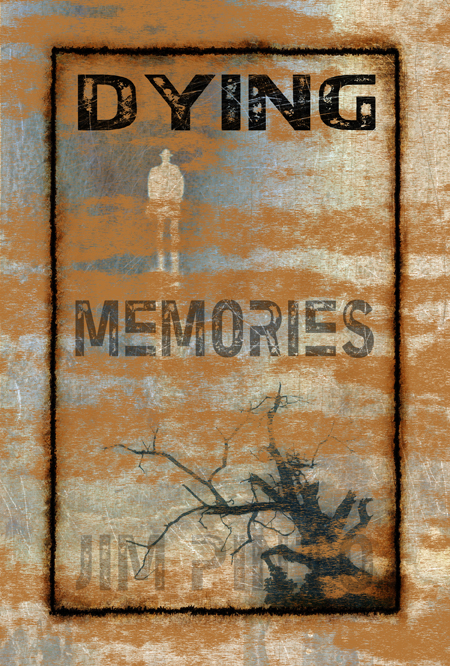 The first of several “small games” on my horizon is Dying Memories, a science ficiotn game that really isn’t science fiction at all. Heavily inspired by Charles Ryan’s Psychosis, Dying Memories takes an antithetical approach to game play.
 post world games